America intervenes to help the Japanese yen strengthen, why?
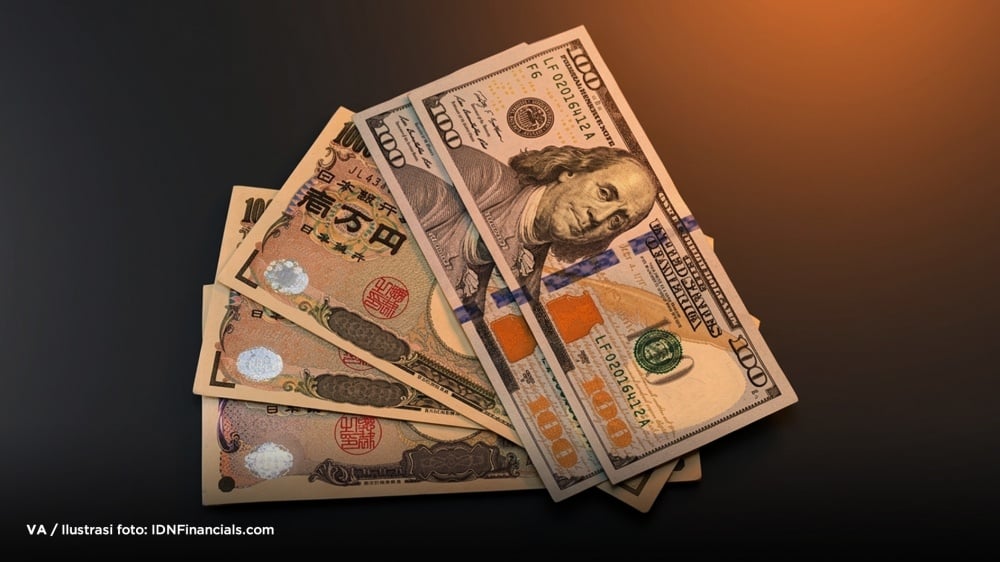
JAKARTA - The United States Department of the Treasury (US Treasury) intervened to support the yen's exchange rate on Friday through direct purchases of the currency.
The move saw the US join Japan in an effort to lift the yen's value, which was near its lowest level in almost 40 years.
The Federal Reserve Bank of New York on Friday (07/31/26), as quoted by Reuters from the Financial Times, reportedly sold euros to buy yen on behalf of the US Treasury through Goldman Sachs and Morgan Stanley.
Earlier the same day, the US Treasury had informed a number of banks that it might intervene in the yen market. "And asked them to prepare for further action," a source familiar with the matter told Reuters.
News of the potential intervention helped push the yen stronger against the US dollar on Friday.
Japanese central bank data also showed that the day before, Japan had likely sold up to US$58.97 billion to buy yen on Thursday (7/30/26), signaling repeated efforts to stem the currency's weakening.
The US Treasury, the Federal Reserve Bank of New York, and Morgan Stanley could not be reached for comment outside of business hours. Meanwhile, Goldman Sachs declined to comment.
News of possible intervention by the US Treasury immediately strengthened the yen in the market.
On Friday's trading, the yen was at 159.09/US$, after weakening to 163.65/US$ the day before.
The mechanism of intervention that the US Treasury will use is still unknown.
The Federal Reserve itself has maintained dollar liquidity swap facilities with the Bank of Japan (BOJ) and four other major central banks since 2013.
Japan's top currency diplomat, Atsushi Mimura, declined to comment directly on the intervention.
However, he hinted at US involvement in efforts to stem the yen's weakening, including through rate checks or requests for indicative US$/yen quotes from market participants, which are generally an early signal before intervention occurs.
Atsushi Mimura added that US support for Japan goes beyond psychological support.
MUFG's currency strategy analyst in London, Lee Hardman, believes the Reuters report on the Treasury's notification to banks strengthens market expectations for potential further intervention.
"The Reuters report about the Treasury informing banks about potential intervention is consistent with the view in the market that the New York Federal Reserve has been conducting rate checks, adding to market participants' unease that there may be further intervention," he said.
"This clearly helps support the idea that there is a risk of possible intervention."
Meanwhile, US Treasury Secretary Scott Bessent said in a social media post on X that the Treasury has strong ties and close coordination with Japanese authorities, although he did not confirm preparations for the intervention.
He also stated that he would meet with Bank of Japan Governor Kazuo Ueda at the G20 Finance Ministers and Central Bank Governors meeting to be held in Asheville, North Carolina, at the end of August.
According to Bessent, the Japanese economy continues to perform well under the leadership of Prime Minister Takaichi, Governor Ueda, and the Bank of Japan Board, who have shown a strong commitment to monetary and financial stability.
The day before, in an interview with Fox Business Network, Bessent said the yen was far below its fair value. He believes Japanese Prime Minister Sanae Takaichi's policies strengthen the country's economic fundamentals.
Bessent said that the yen appears to be significantly undervalued.
He also added that America believes excessive volatility in the yen is unhealthy and the yen's value has gone far beyond what could be called an equilibrium price.
The last time the US Treasury directly intervened to support the yen was in 2011 through a coordinated action by G7 countries after a major earthquake and tsunami hit Japan.
In addition to Japan, the US Treasury also intervened in the Argentine peso market ahead of last year's parliamentary elections. The US government at that time provided a US$20 billion currency swap facility for President Javier Milei's administration to help stabilize the currency and Argentina's dollar bond market.
Some of that support came from the Exchange Stabilization
This translation was generated by AI (Google Gemini) from Indonesian.
