US-Japan intervention boosts yen after months of coordination
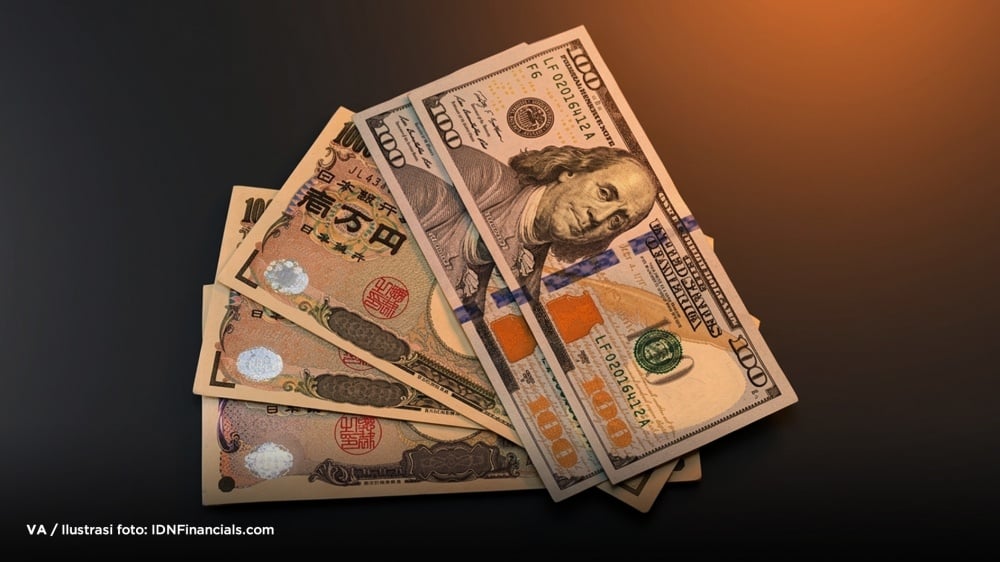
TOKYO – Last week's joint intervention by the United States and Japan to support the yen was the culmination of months of coordination between the two governments.
Their shared interest in exchange rate stability formed the basis of the unusually close co-operation.
According to Reuters, US Treasury Secretary Scott Bessent's public backing for a stronger yen has given the Japanese government fresh ammunition to counter speculative pressure that has continued to weigh on the currency.
For Japan, the weaker yen has driven up import prices and eroded household purchasing power, creating a challenge for Prime Minister Sanae Takaichi's administration.
For the United States, an excessively weak yen undermines the effectiveness of the import tariffs championed by President Donald Trump. At the same time, volatility in Japan's bond market has raised concerns that it could push up US Treasury yields.
These shared interests have led to increasingly intensive discussions on exchange rates between the two countries. An issue that was once diplomatically sensitive has now become a key focus of dialogue between Washington and Tokyo.
According to a Japanese government official familiar with the preparations, the possibility of US involvement in a yen intervention had been discussed as early as January 2026.
At the time, the Federal Reserve Bank of New York conducted an unusual exchange rate inquiry as part of preparations to assist Japan in responding to the yen's depreciation.
Japanese Finance Minister Satsuki Katayama said she had spoken with Scott Bessent around 10 times, including through virtual meetings.
"When he visited Japan in May 2026, we spent three and a half hours discussing the issue, including over dinner," Katayama said when announcing the joint intervention.
The meeting came after Japan carried out large-scale interventions between late April and early May 2026. However, those efforts failed to reverse the yen's downward trend.
Following the May meeting, Katayama said both countries had continued to co-ordinate closely on foreign exchange markets and would maintain that co-operation.
Bessent also said Japan's economic fundamentals remained strong and resilient, and that this would ultimately be reflected in the value of the yen.
He also reiterated his call for the Bank of Japan (BOJ) to accelerate interest rate increases, arguing that an overly slow pace of monetary policy normalisation risked leaving the central bank behind the curve in tackling inflation.
A month later, the BOJ raised its policy rate to 1%, the highest level in 31 years. However, the move failed to provide lasting support for the yen, as Japan's real interest rates remained in negative territory.
Intervention prepared in advance
With the yen having fallen to its weakest level in four decades, Japan's top currency diplomat, Atsushi Mimura, is said to have changed strategy.
Rather than issuing repeated public warnings to markets, Mimura focused on behind-the-scenes co-ordination with US officials, according to two sources familiar with the matter.
That approach made the prospect of intervention more difficult for markets to anticipate. Mimura maintained a low profile even as Katayama and Bessent held a virtual meeting in late June to discuss developments in financial markets.
Pressure to act intensified in July as concerns over the Takaichi administration's expansionary fiscal and monetary policies renewed downward pressure on the yen.
The weaker currency fuelled higher import prices while dragging down the government's public approval ratings.
Meanwhile, the US government was also grappling with rising inflation and higher bond yields, strengthening Washington's incentive to support Japan's efforts to stabilise the market.
The US Treasury's semi-annual report released on 24 July 2026 highlighted Japan's concerns over yen volatility and reaffirmed both countries' commitment to continued consultation on exchange rate policy.
According to Reuters sources, Japan's intervention campaign was also closely co-ordinated with the BOJ.
On 30 July 2026, Mimura gave the green light to buy yen using US dollars during a conference call with officials from the Japanese Ministry of Finance's foreign exchange division.
The intervention immediately lifted the yen to JPY 157.80 per US dollar from around JPY 162.80.
When a staff member later reported that the yen had weakened again towards JPY 158 per US dollar, Mimura simply replied: "All right. We'll regroup tomorrow."
Shortly after BOJ Governor Kazuo Ueda's press conference on Friday (31/7), the yen strengthened sharply again. Market participants suspected Tokyo had intervened once more, this time alongside Washington.
According to Reuters sources, the US Treasury had informed several banks to prepare for the possibility of further intervention in the yen market.
A Reuters photograph from a US cabinet meeting on Friday also showed notes belonging to Bessent headed "To Do", including one item that read: "Buy Japanese Yen (JPY) USD 5-10 billion."
September in focus
Reuters said the BOJ's communication on monetary policy last week was its most hawkish yet.
At his press conference, Ueda stressed that the central bank needed to be more vigilant about upside inflation risks. Many analysts interpreted the remarks as a strong signal that the BOJ could raise interest rates at its September meeting.
The stance also received support from Washington.
"We strongly support Japan's decisive actions in the foreign exchange market and its monetary policy to correct the excessive weakness of the yen," Bessent wrote on X.
Mimura also said the government's exchange rate policy would be aligned with the BOJ's monetary policy, reinforcing expectations of a near-term rate increase.
Bessent added that he would meet Ueda during the G20 Finance Ministers and Central Bank Governors' meeting in the United States at the end of August, shortly before the BOJ's policy meeting on 17-18 September 2026.
Markets are now increasingly confident that the BOJ will raise interest rates in September.
"Now that Japan has managed to halt the yen's decline with support from the United States, the question is whether the BOJ can still afford to delay a rate hike until after September," said Yuki Kimura, a bond strategist at Okasan Securities.
Naomi Muguruma, Chief Bond Strategist at Mitsubishi UFJ Morgan Stanley Securities, said a September rate increase was now almost unavoidable.
"Intervention can only slow exchange rate movements temporarily. For the yen to stabilise sustainably, the BOJ will probably need to raise interest rates sooner," she said.
"I believe a September rate hike is now almost certain. Waiting until October would only leave room for the yen to weaken again." (ARF/ZH)
